
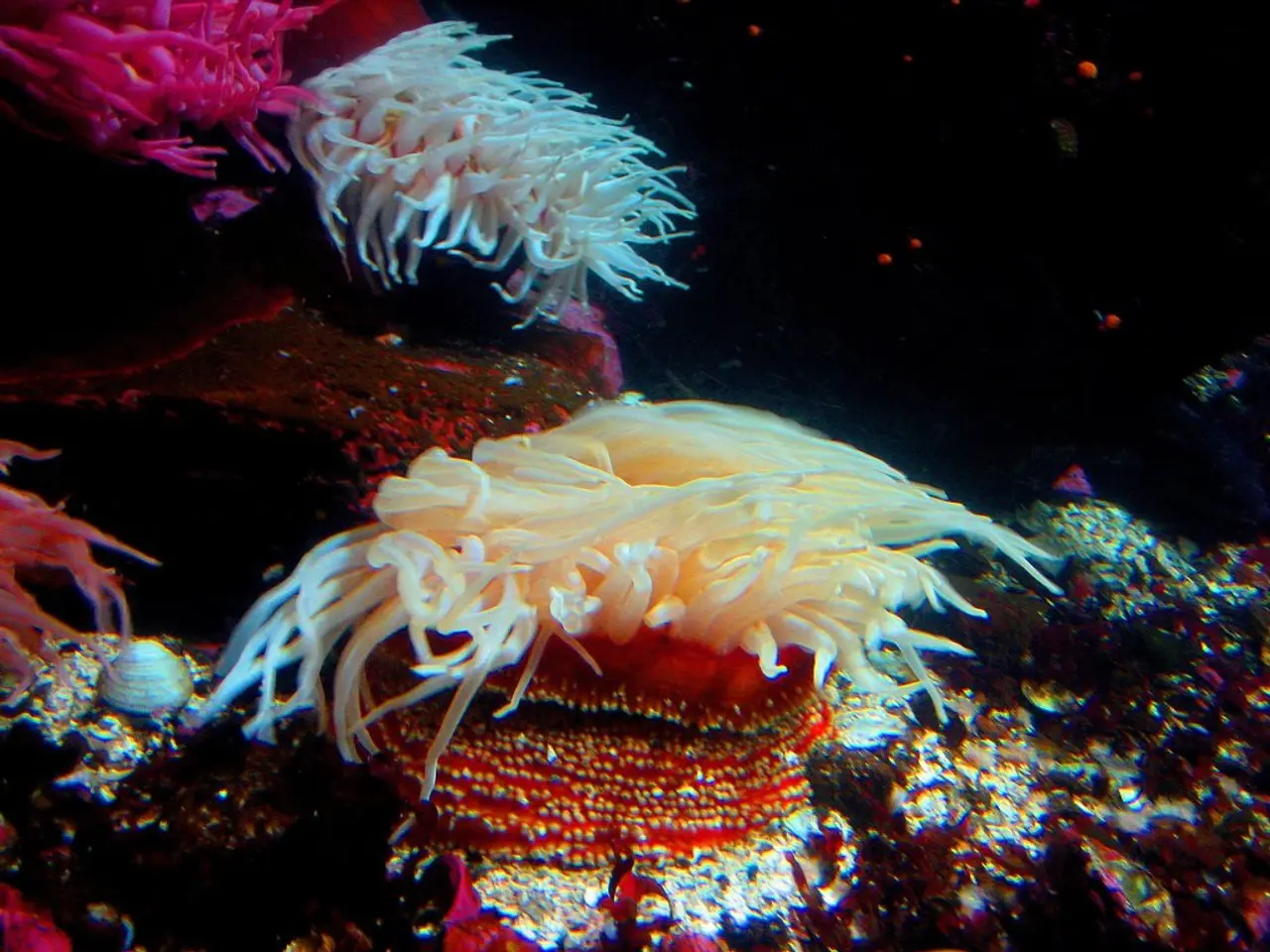
Vibrant marine life flourishes in Abu Dhabi, comprising coral, dugongs, and turtles.
Abu Dhabi's Marine Conservation Success: A Model for the World
The Environment Agency – Abu Dhabi (EAD) has made significant strides in marine conservation, successfully protecting and nurturing the rich biodiversity of the region. EAD's efforts, focused on species such as dugongs and sea turtles, have resulted in impressive improvements in marine ecosystem health.
Dugong Conservation
EAD's conservation efforts have protected approximately 3,500 dugongs, making Abu Dhabi home to the world's second-largest dugong population [1][3]. Advanced technologies like environmental DNA (eDNA) analysis and artificial intelligence (AI) are used to monitor dugong health and numbers accurately [1][3].
Sea Turtle Protection
Over 7,900 sea turtles have been monitored under EAD's programs, with the return of species like the Hawksbill turtle to Abu Dhabi beaches after several years [1][4]. In 2024 alone, 247 Hawksbill turtle nests were recorded, indicating a significant increase due to effective nesting habitat protection efforts [4].
Restoration of Marine Habitats
EAD's ambitious projects aim to restore coral reefs by planting four million coral colonies by 2030 and rehabilitate mangrove forests and seagrass meadows, critical blue carbon ecosystems vital to marine biodiversity and climate mitigation [1][3].
Sustainable Fisheries Management
EAD's initiatives have significantly improved the sustainable fishing index in Abu Dhabi from 8.9% in 2018 to a globally leading 97.4% by the end of 2024. This is achieved through data-driven policies, regulating fishing activities, adopting sustainable fishing gear, managing recreational fishing, establishing six marine reserves, and promoting sustainable aquaculture [1][2][3].
Global Leadership and Recognition
EAD's efforts are showcased on the international stage, including presentations at the United Nations and preparation for the International Union for Conservation of Nature (IUCN) Congress. This highlights Abu Dhabi’s role as a global leader in marine conservation aligned with the Sustainable Development Goals (SDGs), particularly SDG 14 (Life Below Water) [1][3].
The success of EAD's conservation measures is evident in the 2024 survey results, which reflect a thriving marine ecosystem in Abu Dhabi. The survey revealed a more than 20% increase in the dugong population and over a 30% rise in sea turtle numbers [5]. Additionally, the survey documented various other shark, ray, and dolphin species, showcasing the rich biodiversity of Abu Dhabi's marine ecosystems [5].
In October 2025, EAD will host the IUCN Congress, further demonstrating its commitment to global marine conservation efforts. With its advanced model for marine habitat rehabilitation and climate innovation through the "Mangrove Alliance for Climate," EAD continues to lead the way in marine conservation and environmental sustainability [1].
References:
[1] Environment Agency – Abu Dhabi (EAD). (2024). Abu Dhabi's Marine Conservation Success: A Model for the World. Retrieved from www.ead.ae/marineconservation
[2] United Nations Development Programme (UNDP). (2024). Abu Dhabi Achieves 97.4% Sustainable Fishing Index. Retrieved from www.undp.org/news/abu-dhabi-achieves-974-sustainable-fishing-index
[3] International Union for Conservation of Nature (IUCN). (2024). EAD to Host IUCN Congress 2025. Retrieved from www.iucn.org/news/ead-host-iucn-congress-2025
[4] Sea Turtle Conservation Society (STCS). (2024). Abu Dhabi's Sea Turtle Conservation Success. Retrieved from www.seaturtleconservation.org/abudhabi
[5] Abu Dhabi Marine Survey (ADMS). (2024). 2024 Marine Biodiversity Survey Results. Retrieved from www.admsurvey.ae/results
- The use of advanced technologies like environmental DNA (eDNA) analysis and artificial intelligence (AI) in EAD's conservation efforts contributes to the accurate monitoring of dugong health and numbers, playing a significant role in marine conservation.
- EAD's initiatives in species protection and habitat restoration have made Abu Dhabi a global leader in environmental science, particularly in the field of climate change and environmental sustainability.
- The success of EAD's marine conservation efforts extends to the news agenda, with their achievements being showcased on the international stage, such as at the United Nations and the IUCN Congress.
- EAD's focus on science, including data-driven policies and the adoption of sustainable practices in fishing, has improved the environment while fostering a thriving space for marine life, including sharks, rays, and dolphins.




