
Technological Aid in Soil Management: Exploring How Innovation Enhances Farmers' Protection of Their Prime Resource
In the quest to feed a growing global population while preserving the health of our planet, sustainable farming practices are more crucial than ever. The foundation of life on Earth, soil, plays a vital role in this endeavour, and advanced technology is stepping in to support farmers in their mission.
Sustainability is at the heart of modern farming, with farmers working tirelessly to maintain the health of their soil while meeting the needs of communities worldwide. Contour farming, aided by GPS and controlled traffic systems, is one such innovation that helps reduce soil erosion and improve water management.
Soil moisture sensors and GPS technology are two tools that are revolutionising agriculture. GPS technology enables accurate navigation and controlled traffic farming, reducing soil compaction and erosion. It also improves seed placement, minimises overlaps, and optimises machinery operations, leading to fuel savings and a more sustainable approach.
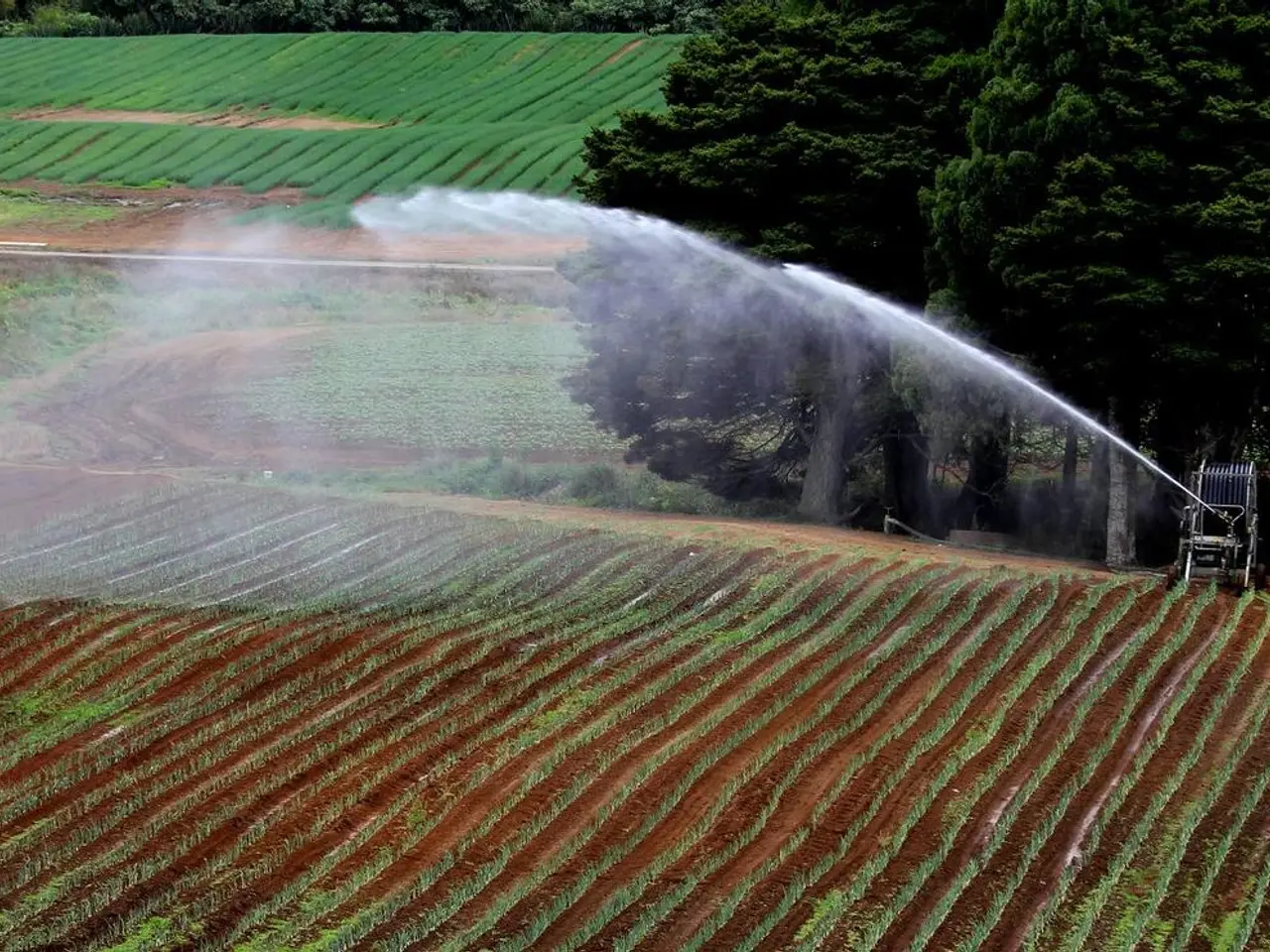
Soil moisture sensors, on the other hand, provide real-time data on soil water content, enabling farmers to precisely schedule irrigation and prevent water overuse or water stress. This technology also supports automated irrigation systems that adjust watering volumes based on soil needs and weather forecasts, leading to significant water savings and protection of soil structure.
By leveraging these innovations, farmers can ensure the soil will be cared for and productive for generations to come. Data collection aids in prediction, allowing farmers to understand and predict how different scenarios may impact soil conditions for the next season. Identifying emerging trends and learning from data empowers farmers to protect the soil and preserve its health.
The future of agriculture lies in microgrids for sustainability and reliability. By reducing soil erosion, optimising resource use, and improving sustainability, these technologies promote sustainable farming. They help preserve soil fertility and structure, enhance irrigation efficiency, increase operational efficiency, and support long-term soil health.
In summary, GPS and soil moisture sensors enable precision agriculture approaches that help farmers conserve and improve soil conditions, use water and inputs more efficiently, and bolster overall agroecosystem sustainability. Healthy soil improves the sustainability of the environment and the food system for years to come. Every five seconds, a soccer field of soil is eroded, underscoring the urgency of these efforts. Let's work together to protect and nurture our soil for a sustainable future.
[1] [Source] [2] [Source] [3] [Source] [4] [Source] [5] [Source]
- Within the realm of environmental science, the integration of technology, such as GPS and soil moisture sensors, is transforming farming practices, promoting conservation and improved soil management for a sustainable future.
- As we forge ahead in this era of technological advancement, the application of precision agriculture techniques, like GPS-aided contour farming and soil moisture sensor-based irrigation, is vital for maintaining soil health and fostering sustainable food production systems.