Ships from World War II might soon unravel a celestial enigma.
In the world of particle physics, the search for materials with minimal radioactivity contamination has taken an unexpected turn. This quest has led scientists to delve into the depths of the ocean, salvaging materials from shipwrecks, and even delving into the ancient past, unearthing lead ingots from Roman times.
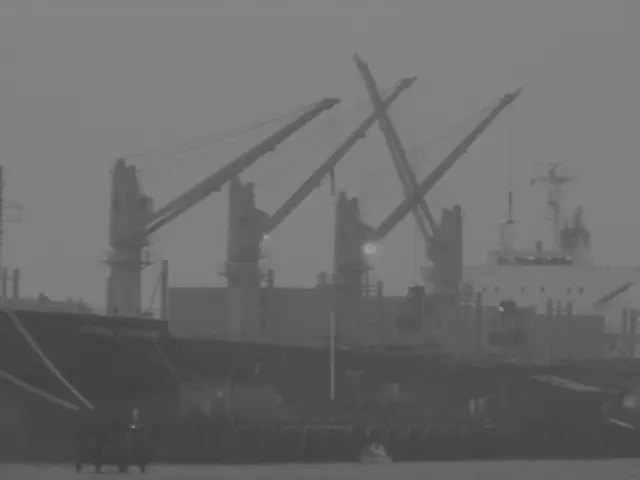
Most of the low-background steel used today comes from salvaged shipwrecks, such as the fleet of 52 German battleships in Orkney, Scotland. These vessels, sunk during World War II, provide a source of steel untainted by the radioactive fallout from nuclear weapons testing and accidents that occurred post-1945. The use of such pre-nuclear era steel is crucial in building ultra-sensitive particle physics detectors that require shielding from background radiation to identify rare events clearly.
Another unexpected source of low-background material is ancient Roman lead. Lead mined by the Romans has had plenty of time to lose its radioactivity due to its long age. This is because lead ore is naturally radioactive, but processed lead still contains trace amounts of the isotope lead-210, which has a half-life of 22 years. However, lead mined over 2000 years ago, like the lead ingots recovered from a Roman ship that sank around 80-50 BC, has had sufficient time for these isotopes to decay away, resulting in ultra-low radioactivity levels.
This demand for "low-background steel" has led to controversial salvage activities on WWII-era shipwrecks, as the historical wreckages are considered war graves, which complicates the acquisition of such materials. In 2017, news broke about the illegal plundering of up to 40 WWII-era warships for low-background steel around Singapore, Indonesia, and Malaysia.
The National Institute of Nuclear Physics in Italy honoured a long-standing agreement by providing 120 lead ingots recovered from a Roman ship for an experiment in 2010. These ingots were used to shield an upcoming experiment due to their ultra-low radioactivity levels, a quality prized among physicists for shielding ultra-sensitive experiments from background radiation.
The radioactivity from nuclear weapons testing has significantly elevated background radiation in modern materials, increasing reliance on pre-nuclear era steel and ancient Roman lead for shielding ultra-sensitive detectors in particle physics research. This demand impacts materials sourcing, conservation issues, and experimental design strategies focused on mitigating radioactive backgrounds.
The general research trend in particle physics continues to emphasize minimizing background noise due to environmental radioactivity, which often arises from human nuclear activity and natural radioisotopes in modern materials. Experiments in rare-event particle physics, such as searches for dark matter or neutrino interactions, require extremely low background radiation environments, making these materials crucial.
In summary, the radioactivity from nuclear weapons testing has left a lasting impact on particle physics research, driving the demand for pre-nuclear era steel and ancient Roman lead. This demand impacts materials sourcing, conservation issues, and experimental design strategies focused on mitigating radioactive backgrounds. The ongoing use and demand for low-background materials remain critical for advancing particle physics experiments into regimes sensitive to faint signals caused by extremely rare particle interactions.
- The impact of nuclear weapons testing on background radiation in modern materials has necessitated the search for alternative low-background materials, such as pre-nuclear era steel and ancient Roman lead, in the field of particle physics.
- Scientists are currently salvaging materials from ancient Roman times, including lead ingots, to use in the construction of ultra-sensitive particle physics detectors.
- The demand for low-background steel has led to contentious salvage activities on World War II-era shipwrecks, causing debates about the historical significance of these wreckages.
- To shield ultra-sensitive particle physics experiments from background radiation, researchers are focusing on environmental science to minimize interference from natural radioisotopes.
- Researchers in environmental science and particle physics collaborate to ensure minimal contamination from radioactivity in their experiments, particularly when investigating rare events like those related to dark matter or neutrino interactions.
- The advancement of particle physics experiments into regimes sensitive to faint signals caused by extremely rare particle interactions depends critically on the continued use and demand for low-background materials, such as pre-nuclear era steel and ancient Roman lead.