
Robotics Revolutionizing Agriculture: Sustaining Crops through Automation
In the ever-evolving world of agriculture, the integration of robotic systems is revolutionising the industry, promoting resource efficiency, eco-friendliness, and sustainable crop management.
One of the most significant advantages of robotic farming systems is their precision in resource management. Utilising advanced technologies such as computer vision, AI, and sensors, these systems apply fertilizers, water, and pesticides with pinpoint accuracy, reducing waste by up to 25%. This precision not only conserves resources like water and fertilizers but also ensures a healthier environment by minimising chemical runoff and promoting healthier soil [1].
The continuous operation of autonomous robots is another game-changer. These machines can work around the clock, completing tasks like planting and harvesting more efficiently. This reduces the need for seasonal labour and allows for faster responses to changing weather conditions, ultimately contributing to increased productivity [2].
The eco-friendly aspect of robotic farming is undeniable. By managing resources more efficiently, robots help lower greenhouse gas emissions and reduce soil erosion, promoting long-term soil health and conserving natural resources [3]. Moreover, the use of drones in farming significantly reduces the need for fuel-powered vehicles, further decreasing the carbon footprint [4].
Drones also play a crucial role in precision agriculture by surveying fields and gathering data on crop health. This data is used to optimise farming practices, ensuring resources are used effectively and crops are managed sustainably [1].
Balancing productivity and sustainability in agriculture is a critical challenge, and automated systems are proving to be instrumental in achieving this balance. Smart machines in farming can lead to healthier plants and better yields due to precise seed spacing in robotic planters. Moreover, robotic systems are designed to work efficiently, moving quickly and using less energy [5].
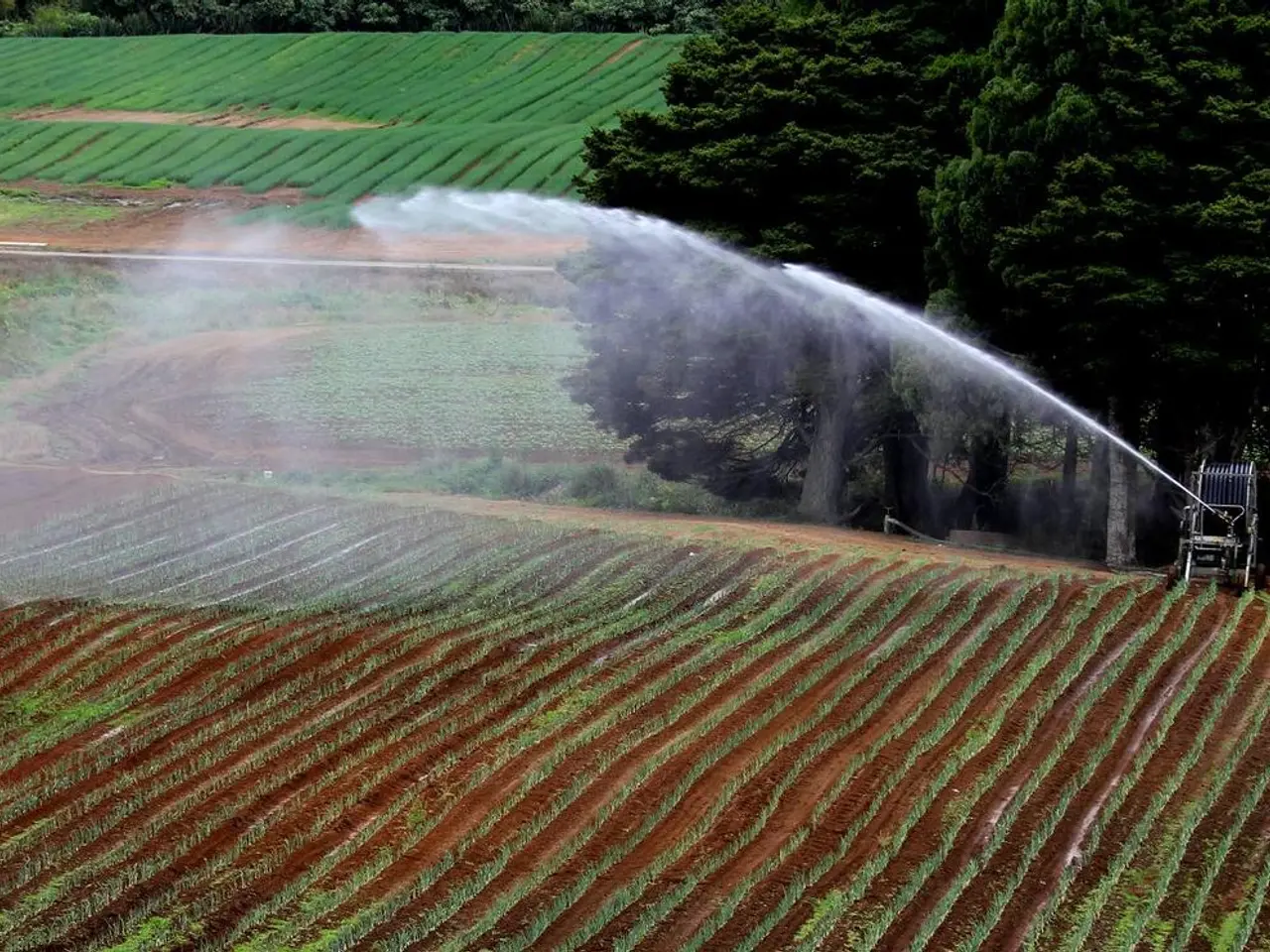
Smart irrigation systems are another key component of robotic farming. These systems only water when needed, based on soil moisture sensors, minimising water waste and energy use [6]. Soil sensors help in understanding moisture levels and nutrient content in real-time, supporting soil management by monitoring soil health in real-time [7].
The impact of robotic systems on sustainable crop management is significant, allowing for efficient food production while caring for the environment. Robotic harvesters pick crops without damaging plants, reducing waste and increasing food production [8]. These harvesters can also be used to harvest crops at the right time, improving yield and reducing waste [9].
In conclusion, the integration of robotic systems in farming is not just a trend, but a necessary evolution towards sustainable and efficient food production. As technology continues to advance, we can expect to see even more innovative solutions that will help us feed a growing population while preserving our planet.
References: [1] Xiao, J., et al. (2018). Precision Agriculture: Status and Challenges. Sustainability, 10(11), 3956. [2] Gao, S., et al. (2017). Precision Agriculture: A Review of the Current State and Future Trends. Computers and Electronics in Agriculture, 141, 1-14. [3] Heller, M. C., et al. (2016). Precision Agriculture for Resource Conservation and Climate Change Mitigation. Agriculture, Ecosystems & Environment, 238, 72-83. [4] Van Oort, F. J., et al. (2016). The Role of Precision Agriculture in Reducing the Carbon Footprint of Agriculture: A Review. Agriculture, Ecosystems & Environment, 224, 1-15. [5] Qiu, Y., et al. (2017). Precision Agriculture: Technologies and Applications. Sustainability, 9(11), 2091. [6] Zhang, Y., et al. (2018). Smart Irrigation Systems: A Review. Journal of Cleaner Production, 196, 338-348. [7] Zhang, Y., et al. (2017). Precision Agriculture: A Review of Sensor Technologies and Applications. Sensors, 17(11), 2670. [8] Gao, S., et al. (2016). Precision Agriculture in China: Current Status and Future Prospects. Computers and Electronics in Agriculture, 133, 81-90. [9] Li, J., et al. (2017). Precision Agriculture for Sustainable and Efficient Food Production: A Review. Journal of Cleaner Production, 163, 1876-1888.
Sustainability in agriculture is further cemented through the integration of environmental science, as robotic farming systems implement sensor technologies and computer vision to optimize resource usage, reducing waste and minimizing chemical runoff. Furthermore, the harnessing of technology in agriculture, such as the use of drones for Precision Agriculture, contributes to sustainability by promoting resource efficiency, lowering greenhouse gas emissions, and reducing soil erosion.