
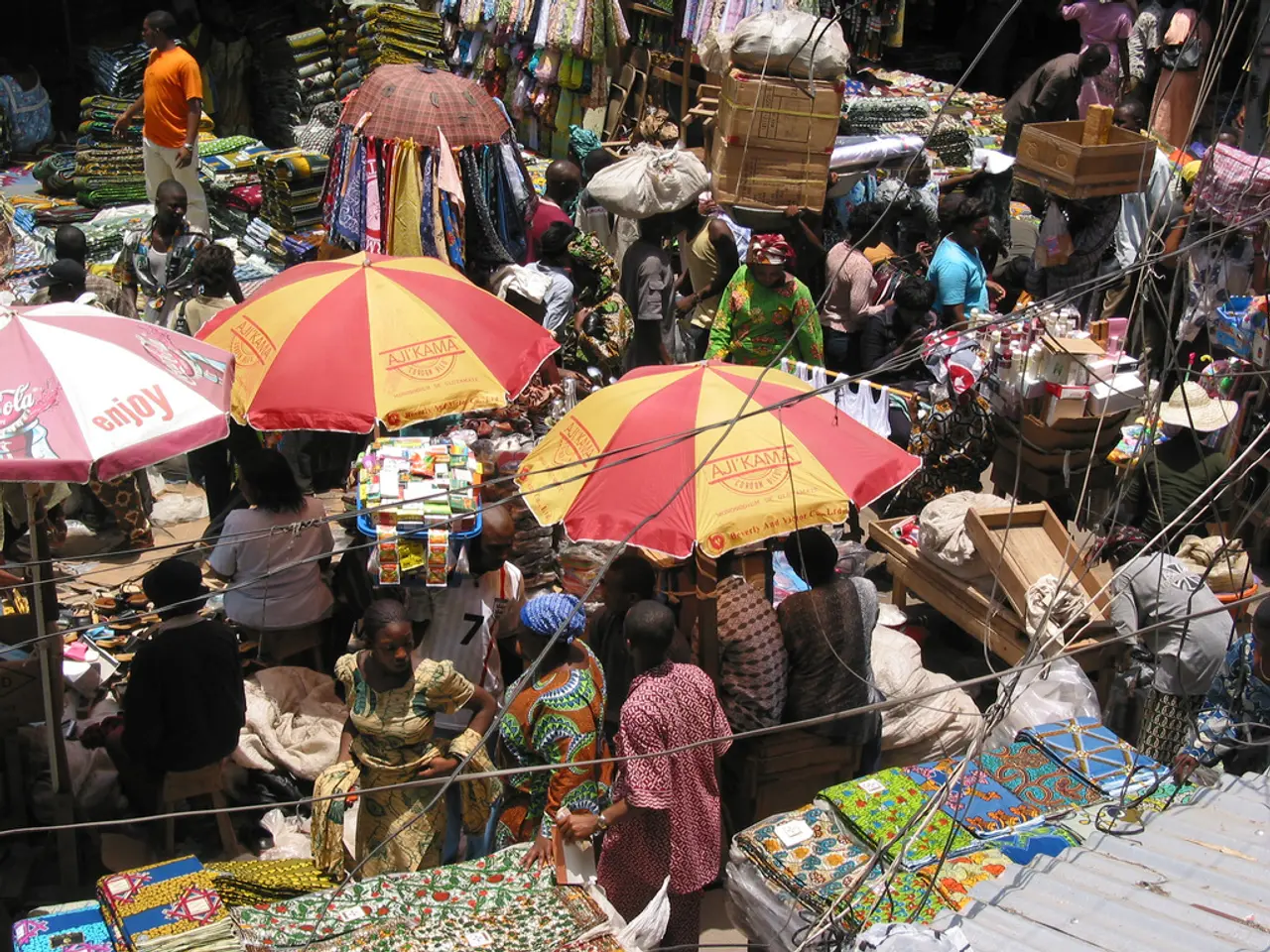
Retailers Moving Away From UPI: Investor Akshat Shrivastava Discloses Reasons Behind UPI Desertion From Shops
In recent times, a heated debate has erupted on social media platforms, particularly LinkedIn, concerning the impact of India's Income Tax and Goods and Services Tax (GST) burdens on small entrepreneurs. This commentary has sparked a larger conversation about finding a balance between improving tax compliance and digital adoption without penalizing the smallest businesses.
One of the primary concerns raised is the pressure small traders face to conform to formalized tax systems like GST, which may lead to price hikes and drops in sales due to the requirement to add 5-18% GST to the final price of goods or services. This pressure, coupled with limited support and infrastructure, has led to discussions about the need for more facilitative measures.
To support small traders, the government has introduced several key initiatives. One such initiative is the GST Amnesty Scheme 2025, which offers temporary relief to small businesses, allowing them to regularize their tax compliance by paying capped late fees and receiving full waivers on penalties for non-serious defaults.
Another initiative is the Composition Scheme Under GST, a simplified tax regime for small businesses with turnover up to Rs. 1.5 crore (goods) and Rs. 50 lakh (services). This scheme allows payment of tax at a fixed, lower rate with minimal paperwork, reducing compliance hassles significantly.
The Trade Receivables Discounting System (TReDS) platform is another measure aimed at improving the financial access of small traders by facilitating financing of trade receivables. This initiative has garnered support from several digital platforms and banks, aimed at boosting liquidity for small traders.
State-level support and reliefs have also been provided, such as waivers on past GST dues and organizing workshops with trade bodies to clear misconceptions. For example, Karnataka’s Chief Minister recently assured small traders of waivers on past GST dues if they agree to register now.
However, challenges remain, including infrastructural and awareness gaps. Many small traders do not differentiate between personal and business finances, which can create gaps in financial inclusion. The use of a single shared account by family members is common, with some family members not having bank accounts. This can lead to misinterpretations of financial activity, potentially resulting in tax or GST liabilities.
To address these challenges, the government has increased scrutiny on unregistered small traders, with the aim of nudging informal traders into the formal GST regime. However, the focus is on enhancing fairness and revenue without disproportionate harassment.
Akshat Shrivastava, a business educator and influencer, has expressed concerns about the challenges faced by small traders in India due to the pressure to conform to formalized tax systems. He criticizes the government's enforcement priorities, arguing that focusing on small vendors while large-scale financial irregularities go unchecked shows a skewed approach.
In conclusion, the debate on improving tax compliance and digital adoption in India is focusing on ways to avoid penalizing small entrepreneurs while addressing their challenges. The measures introduced by the government aim to balance enforcement with facilitation—reducing penalties for small defaulters, simplifying compliance, improving financial access, providing state-level relief, and gradually integrating informal businesses into the formal tax system. However, addressing infrastructural and awareness gaps remains a key challenge.
[1] https://www.financialexpress.com/economy/gst-amnesty-scheme-2025-govt-to-allow-traders-to-regularise-tax-compliance-with-capped-late-fees/2284057/ [2] https://www.thehindubusinessline.com/economy/gst/gst-composition-scheme-2022-here-are-the-key-changes/article32402424.ece [3] https://www.livemint.com/industry/banking-finance/gst-council-to-discuss-ease-of-doing-business-measures-on-july-21/amp_articleshow/89971713.cms [4] https://www.thehindu.com/business/Industry/karnataka-cm-s-assurance-to-waive-gst-dues-for-small-traders-if-they-register-now/article35854243.ece
- Akshat Shrivastava, a business educator and influencer, has argued that the government's focus on small vendors while overlooking large-scale financial irregularities demonstrates a skewed approach to improving tax compliance and digital adoption in India.
- The Trade Receivables Discounting System (TReDS) platform, a measure introduced by the government, is aimed at enhancing the financial liquidity of small traders by facilitating financing of trade receivables, garnering support from digital platforms and banks.
- Some small traders in India face challenges in differentiating between personal and business finances, leading to gaps in financial inclusion as the use of a single shared account by family members is common, with some family members not having bank accounts.
- To help small traders adapt to formalized tax systems like GST, the government has introduced initiatives such as the GST Amnesty Scheme 2025 and the Composition Scheme Under GST, offering temporary relief, reduced compliance hassles, and simplified tax payments for small businesses.